


Mahalaya Amavasya 2026: Rituals, Flowers & Pooja Guide
Mahalaya Amavasya 2026: Rituals, Flowers & Pooja Guide
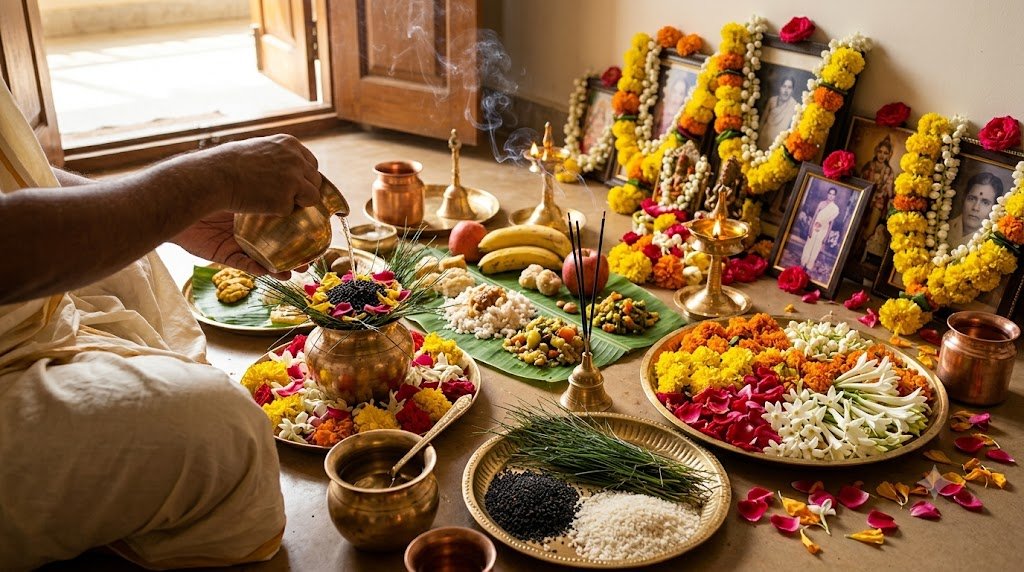
Mahalaya Amavasya, a significant day in the Hindu calendar, marks the beginning of the festive season in India. Falling on the new moon day, it is a time to honor ancestors through various rituals and poojas. Mahalaya Amavasya 2026 falls on Saturday, 10 October 2026. Also known as Sarva Pitru Amavasya, it marks the concluding day of Pitru Paksha, a sacred period dedicated to remembering and honouring ancestors.
Significance of Mahalaya Amavasya
Mahalaya Amavasya, also known as Pitru Paksha Amavasya, is dedicated to paying homage to one’s ancestors. It is believed that performing rituals on this day grants peace to the souls of the departed and brings blessings to the family. Families may perform Tarpan, Shraddha, food offerings and charity according to their customs and traditions.
Traditional Rituals and Practices
Families may observe the day by:
- Offering prayers for departed ancestors
- Performing Tarpan or Shraddha according to family tradition
- Preparing traditional food offerings
- Offering flowers and other prescribed items
- Donating food or other essentials as an act of charity.
Traditional Flowers for Pooja
Flowers play a crucial role in poojas and rituals, symbolizing purity and devotion. On Mahalaya Amavasya, certain flowers are favored for their spiritual significance:
- Marigolds: Known for their vibrant color and fragrance, marigolds are believed to attract positive energy.
- Jasmine: A symbol of purity, jasmine flowers are often used in garlands and offerings.
- Roses: Representing love and devotion, roses are a staple in many religious ceremonies.
- Tuberose: Known for its sweet fragrance, tuberose is traditionally offered in puja and used to decorate homes and prayer spaces.
- Chrysanthemums: Symbolising purity and devotion, chrysanthemums are commonly used in puja, garlands, and decorations.
Pooja Guide for Mahalaya Amavasya
To conduct a traditional pooja on Mahalaya Amavasya, follow these steps:
- Clean the pooja area and arrange the necessary items like flowers, incense sticks, and a lamp.
- Place a photo or idol of your deity along with pictures of your ancestors.
- Light the lamp and incense sticks, and offer flowers and food to the deity and ancestors.
- Chant the mantras and perform the Tarpan ritual.
- Conclude the pooja by seeking blessings and distributing the prasad among family members.