

History & Mythology of Jasmine, Rose, and Marigold
History & Mythology of Jasmine, Rose, and Marigold
Flowers are not just gifts of nature; they are storytellers. For centuries, cultures across the world have used flowers to express love, devotion, purity, and celebration. In India, flowers hold an even deeper significance — they are a bridge between humans and the divine.
Among the countless blooms, Jasmine, Rose, and Marigold stand apart. They are not only beautiful but also carry centuries of mythology, history, and tradition. Let’s take a journey through time and unravel the stories these flowers whisper.
Jasmine – The Fragrant Messenger of Love
A Glimpse into History
Known as “Mallika” in Sanskrit and “Malligai” in Tamil, jasmine is often called the Queen of Fragrance. Ancient texts describe its use in:
- Ayurveda – for calming the nerves and improving skin glow.
- Royal Palaces – Mughal queens adorned jasmine oils and garlands.
- Everyday Life – Even today, women in South India wear jasmine in their hair as a mark of beauty and auspiciousness.
Mythological Connections
- Lord Vishnu & Goddess Lakshmi – Jasmine is offered to them in temples as a symbol of purity and prosperity.
- Lord Shiva – Jasmine garlands are considered sacred offerings during Shivratri.
- Tamil Literature – Ancient Sangam poems compare the heroine’s beauty to blooming jasmine buds.
Fun Fact
In many cultures, jasmine is called the flower of the moon because its fragrance is strongest at night.
Rose – The Eternal Symbol of Beauty and Devotion
Historical Journey
The rose has traveled across empires, kingdoms, and centuries.
- Ancient Persia – The birthplace of rose cultivation, where rosewater was invented.
- Egypt – Cleopatra is said to have used rose petals in her baths.
- India – Mughal gardens were filled with roses, and Gulab Jal (rose water) became a part of daily rituals.
Myths & Legends
- Hindu Myth: Goddess Lakshmi is believed to have been born from a thousand rose petals, making the flower sacred to her.
- Greek Myth: Red roses bloomed from Aphrodite’s tears for her lover Adonis, symbolizing love mixed with sacrifice.
- Christianity: The rose represents the Virgin Mary — purity and compassion.
Symbolism Across Cultures
- Red Rose – Passion & Love
- White Rose – Purity & Peace
- Yellow Rose – Friendship & Joy
- Pink Rose – Gratitude & Admiration
Fun Fact
The world’s oldest living rose bush is over 1,000 years old and still blooms on a cathedral wall in Germany.
Marigold – The Flower of Festivals and Faith
Historical Footsteps
Though native to the Aztec civilization of Mexico, marigold found its way to India through Spanish travelers. Here, it became the most widely used flower in temples and festivals.
Spiritual & Mythological Value
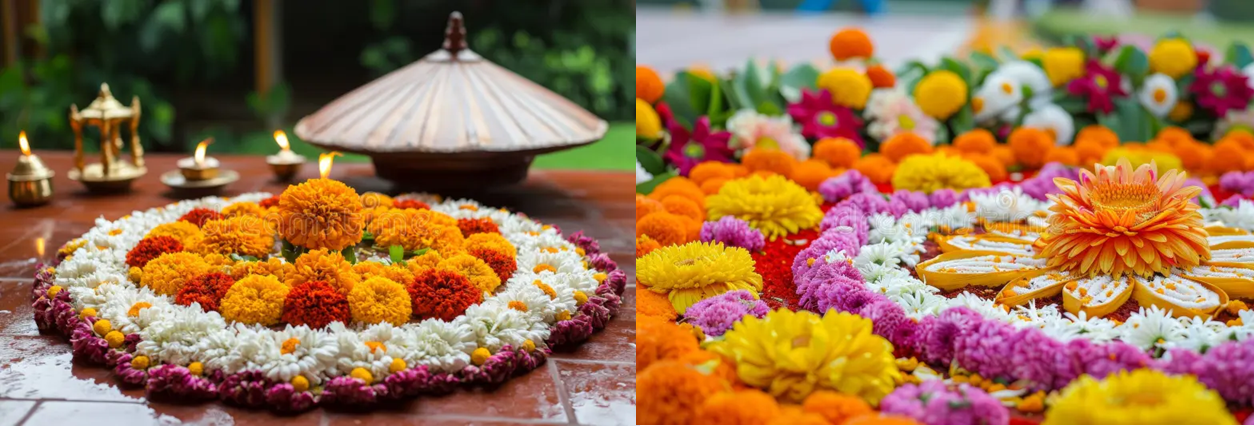
- Hinduism: Marigolds are sacred to Lord Vishnu and Goddess Lakshmi. They are used to make torans, malas, and rangolis during Diwali, Navratri, and Ganesh Chaturthi.
- Color Symbolism: The golden-orange shades represent the sun, fire, and purity — burning away negativity and inviting divine blessings.
- Mexican Tradition: On the Day of the Dead (Día de los Muertos), marigolds are believed to guide the souls of ancestors back home.
Fun Fact
In some Indian villages, marigolds are planted around homes and fields because people believe they ward off evil spirits and pests.
Flowers Across India – A Cultural Tapestry
- South India: Jasmine garlands are worn daily; temples overflow with marigold decorations during festivals.
- North India: Roses and marigolds dominate weddings, poojas, and Holi celebrations.
- East India: Marigolds decorate Durga Puja pandals, while roses and jasmine are offered in temples.
- West India: In Gujarat and Maharashtra, marigolds are used for torans and temple entrances during Navratri.
No matter the region, flowers are woven into the cultural fabric of India.
Why Jasmine, Rose, and Marigold Still Matter Today
Even in modern times, these flowers continue to hold their place:
- In Spirituality: Offered in temples, poojas, and daily prayers.
- In Weddings: Jasmine adorns brides, roses symbolize love, and marigolds decorate mandaps.
- In Homes: Their fragrance and colors bring positivity and joy.
- In Wellness: Rosewater refreshes, jasmine oil calms, and marigold extracts heal.
Post a Comment
You must be logged in to post a comment.