


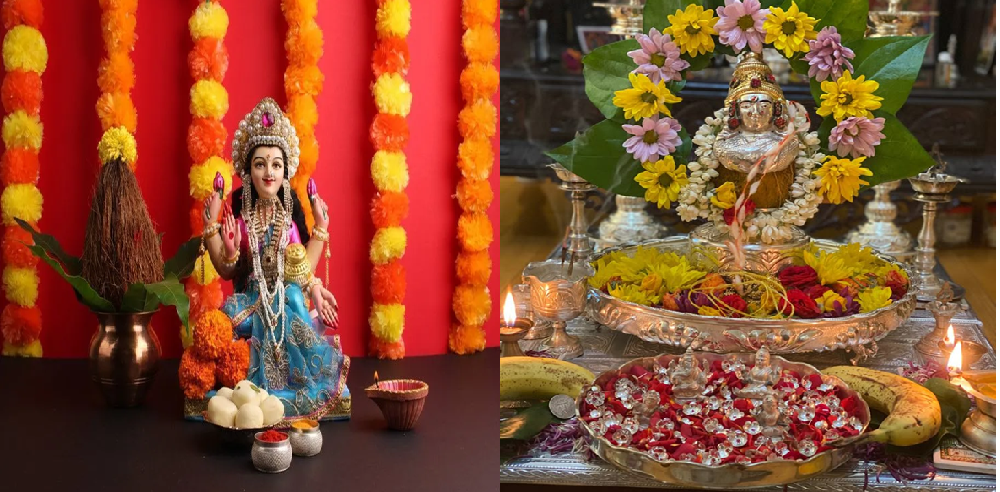
Must – Have Flowers For Lakshmi Pooja
Lakshmi Pooja is one of the most revered rituals in Hindu tradition, especially during Diwali and Fridays dedicated to Goddess Lakshmi. The Goddess of wealth, fortune, and prosperity is not only worshipped with devotion but also welcomed with fragrance, colors, and sacred flowers. Each flower offered to her holds spiritual meaning, enhances the pooja atmosphere, and attracts positive energy.
Below is a detailed guide to the essential flowers for Lakshmi Pooja, and why they are important.
1. Lotus (Thamarai) – The Goddess’s Favourite
Why it’s special: The lotus is the most sacred flower for Goddess Lakshmi. She is almost always depicted seated or standing on a fully bloomed pink lotus, with two lotuses in her hands.
- Symbolism: Purity, detachment from materialism, spiritual growth, divine energy
- Preferred Colors: Pink, White
How to Offer:
- Place a lotus flower directly beneath the idol or picture of Lakshmi
- Float the lotus in a bowl of water with a lit lamp beside it
Pro Tip: A garland or bunch of lotus petals adds divine beauty to the altar.
2. Rose Petals – A Fragrant Offering of Bhakti
Why it’s used: Red and pink roses are seen as a symbol of love, gratitude, and devotion. Lakshmi accepts them as heartfelt offerings.
- Symbolism: Love, strength, grace, purity of heart
- Preferred Colors: Red, Pink, White
How to Offer:
- Scatter loose petals in the pooja thali
- Use them to decorate the Kalash (holy pot) and lamps
Pro Tip: Create a rose petal rangoli or border around the Lakshmi idol for added vibrance.
3. Jasmine (Malli) – The Scent of Serenity
Why it’s important: Jasmine is widely known for its soothing fragrance and is considered highly sattvic (pure).
- Symbolism: Purity, peace, spiritual energy
- Preferred Colors: White
How to Offer:
- String jasmine into a garland or veni
- Place around the lamp (deepam) or on the Lakshmi idol’s head
Pro Tip: Wear a jasmine gajra while doing pooja to elevate your spiritual mood.
4. Marigold (Samanthi) – For Positive Vibes
Why it’s popular: Marigold is known for its bright color, longevity, and insect-repelling properties. It is believed to attract positive vibrations.
- Symbolism: Energy, protection, auspiciousness
- Preferred Colors: Yellow, Orange
How to Offer:
- Create garlands or torans (door hangings)
- Decorate your pooja space, lamps, and photo frames
Pro Tip: Mix marigolds with mango leaves for traditional festival decor.
5. Tuberose (Sampangi) – The Night Blossom of Divinity
Why it’s unique: Tuberose, or Sampangi, blooms at night and emits a long-lasting, calming fragrance. Ideal for evening poojas.
- Symbolism: Prosperity, calmness, divine connection
- Preferred Colors: White
How to Offer:
- Use it in veni or hair garlands
- Place in water bowls around the altar
Pro Tip: Tuberose pairs well with jasmine in floral arrangements for Lakshmi Pooja.
6. Chrysanthemum (Chamanti) – The Flower of Joy
Why it’s loved: Chrysanthemums are long-lasting and come in auspicious colors like yellow and white, symbolizing joy and new beginnings.
- Symbolism: Positivity, cheerfulness, mental clarity
- Preferred Colors: Yellow, White
How to Offer:
- Use them to decorate pooja plates
- Float petals in water-filled urulis with diyas
Pro Tip: Offer a yellow chrysanthemum garland to the Goddess for blessings of clarity and focus.
7. Shankh Pushpam (Aparajita / Butterfly Pea Flower)
- Color: Deep Blue or White
- Symbolism: Spiritual wisdom, humility, and focus
- Use: Commonly used in South India, especially in traditional homes. These are offered in groups of 3, 5, or 7 to invoke balance and peace in the household.
- Belief: Said to remove negativity and bring intellectual clarity.
8. Hibiscus (Sembaruthi / Japakusum)
- Color: Red
- Symbolism: Power, passion, and Shakti (feminine energy)
- Usage: Though more associated with Devi Durga, some regions offer hibiscus to Lakshmi, especially Red Hibiscus during Friday poojas.
Pro Tip: Combine hibiscus with red rose petals for a vibrant altar.
9. Parijata (Night Jasmine / Coral Jasmine)
- Color: White with Orange stem
- Mythology: Said to be a heavenly tree that blooms in the early hours of dawn. It is believed to be favored by Lakshmi and Indra.
- Use: Mostly used in early morning poojas before sunrise or during Kojagari Lakshmi Pooja.
- Fragrance: Light and mystical, perfect for invoking serenity.
10. Kanakambaram (Crossandra / Firecracker Flower)
- Color: Orange
- Symbolism: Energy, endurance, and fertility
Popular in Tamil Nadu and Andhra Pradesh, this flower is a cultural staple.
- Use: Ideal for long pooja sessions because it doesn’t wither quickly. Often strung into garlands with jasmine.
Regional Variations of Lakshmi Flower Offerings
South India (Tamil Nadu, Karnataka, Andhra Pradesh):
Sampangi (Tuberose), Malli (Jasmine), Sembaruthi (Hibiscus), Kanakambaram, Lotus
Decorated with banana leaves, vilvam leaves, turmeric plant leaves, and rangoli
North India:
Rajnigandha (Tuberose), Rose, Marigold, Kamal (Lotus), Shankh Pushpam
Garlands for Lakshmi idols made of marigold and mango leaves
Eastern India (Bengal, Odisha):
Lotus, Aparajita, Rose, Hibiscus
Flowers are floated in kalash water and used during Kojagari Lakshmi Pooja
Ritualistic Tips for Flower Offering in Lakshmi Pooja
- Offer with your right hand, while chanting Lakshmi mantras (like “Om Shreem Mahalakshmyai Namaha”)
- Do not smell the flowers before offering – they should remain unspoiled
- Always rinse flowers lightly with clean water before use
- Store them in a banana leaf or cotton cloth to retain freshness
- Remove withered flowers immediately after pooja – keep the altar clean and vibrant
- For evening poojas, pick strong-scented flowers like Sampangi or Jasmine
The Spiritual Power of Flower Colors in Lakshmi Worship
Each flower color has a symbolic vibration that connects to the divine aspects of Lakshmi:
- Color Spiritual Meaning Ideal Flower Example
- White Purity, peace, sattva Jasmine, Tuberose, Lotus
- Pink Love, grace, compassion Lotus, Roses
- Red Strength, fertility, wealth Hibiscus, Roses
- Orange/Yellow Prosperity, sunlight, optimism Marigold, Kanakambaram
- Blue/Violet Wisdom, devotion, inner clarity Shankh Pushpam
Flower Decoration Ideas for Lakshmi Pooja
Need inspiration for beautifying your pooja space?
- Floral Uruli: Float lotus or rose petals with ghee lamps for the entrance or pooja room
- Garlands: Adorn the Lakshmi idol and kalash with jasmine, rose, or marigold garlands
- Door Toran: Hang marigold + mango leaf torans on the main door
- Pooja Thali: Decorate your plate with layered petals – white on outside, pink in center
- Lamp Wrapping: Wrap a Sampangi Veni around the base of your deepam or lamp
Post a Comment
You must be logged in to post a comment.